The Beginning: Multidisciplinary Education | 1980s onward
During its formative years, Maitreya developed an unusually broad educational program that brought together art, healing, spirituality, philosophy, meditation, psychology, science, anthropology, and cultural traditions.
In its first five years alone, the Institute presented more than 75 classes annually at venues throughout Hawai‘i. Programs welcomed perspectives from different religions, philosophies, cultures, and disciplines, seeking accomplished presenters capable of making profound ideas accessible and practically meaningful.
Over the years, Maitreya presented or co-sponsored programs involving internationally recognized figures including His Holiness the Dalai Lama, Deepak Chopra, and Dr. Gerald “Gerry” Jampolsky, alongside Hawaiian kumu, kūpuna, cultural practitioners, educators, healers, and community leaders.
This early period established a principle that would remain central throughout Maitreya’s evolution: wisdom becomes richer when different traditions and disciplines are given meaningful opportunities to encounter one another.

Aloha Center | Beginning in 1998
As Maitreya’s work evolved, its history intersected with the Aloha Center, founded by Chris Miller in 1998 and grounded in a vision of humanity as fundamentally connected.
Its educational and healing work sought to help individuals, communities, cultures, and societies move beyond perceptions of separation and toward greater self-awareness, communication, peace, and connection.
This relationship reinforced an idea that would become increasingly important in Maitreya’s work: healing separation begins by recognizing the relationships that already connect us.

Conversations on Aloha in Business | 2010–2011
The same questions Maitreya had explored through healing and spirituality eventually entered another arena: business.
Beginning in 2010 at Argosy University in Honolulu, Maitreya contributed to Conversations on Aloha in Business, a six-part series co-sponsored by Enterprise Honolulu and the Hawai‘i Forgiveness Project. Introduced by Roger H. Epstein, the series brought Hawaiian cultural practitioners, educators, business leaders, and community voices together to consider how Aloha could inform business, leadership, economic development, and organizational life.
Running from August 2010 through January 2011, the conversations addressed socially responsible business, tourism, hoʻoponopono, visioning, education, transparency, conflict resolution, and interconnectedness. Participants and presenters included Pono Shim, Ramsay Taum, Mike McCartney, Myron Thompson, Corbett Kalama, and others.
The series represented an important expansion of Maitreya’s work: Hawaiian wisdom was not only relevant to personal or spiritual life; it could also help us reconsider how organizations operate and how economic activity affects people and communities.
Island Business & Masters of Aloha in Business | 2010s–2015 onward
The exploration of Aloha and interconnectedness in organizational life continued through Maitreya’s relationship with Chaminade University and Hawaiian community and educational leaders.
The Island Business initiative brought together perspectives including those of Ramsay Taum, Kauila Clark, and evolutionary biologist Elisabet Sahtouris to explore how Hawaiian cultural wisdom, Gross National Happiness, relationship, and responsibility might inform a different understanding of business—one in which economic activity serves communities as well as generating financial value.
Beginning in 2015, this work developed further through Masters of Aloha in Business, an educational initiative envisioning a curriculum grounded in principles including Aloha, mālama, kuleana, lōkahi, laulima, pono, and hoʻoponopono.
Although the envisioned academic pathways evolved over time, the central question endured: What would organizations look like if their success were measured not only by what they produced, but also by how they cared for people, culture, community, and the environment?
That question would become increasingly important in Maitreya’s later work.

Ho‘omāika‘i: The Voyage of Aloha | 2012
In 2012, many of these emerging ideas came together in one of the defining gatherings in Maitreya’s history: Ho‘omāika‘i: The Voyage of Aloha.
Developed by Kumu Kauila Clark and Roger Epstein and “navigated” by Kumu Ramsay Taum, the gathering used Hawaiian voyaging as a framework for exploring a fundamental human transition: moving from seeing ourselves as separate individuals toward recognizing the deeper reality of our interconnectedness.
Through Hawaiian cultural practice, song, dance, presentations, dialogue, and perspectives from multiple traditions, participants explored what it might actually mean to live from that reality.
The experience became foundational to Maitreya’s subsequent work, helping transform connectedness from a philosophical concept into a central area of education, dialogue, and practice.

Families, Fathers & Community Well-Being | 2010
Maitreya’s understanding of connectedness also found practical expression through work touching families, parenting, rehabilitation, and culturally responsive education.
Through relationships with organizations including the Institute for Family Enrichment (TIFFE), this broader network included the Nurturing Fathers Program of Hawai‘i, which worked with fathers in correctional facilities and communities to strengthen nurturing, responsibility, communication, healing, and family relationships.
Historical records document programming at OCCC, Waiawa, and Hālawa correctional facilities, as well as community settings throughout O‘ahu. Those records report 248 fathers participating and 197 certificates awarded across three correctional settings.
The work reflected an enduring principle within Maitreya’s history: loving-kindness and connectedness acquire their greatest meaning when they become practical forms of service.
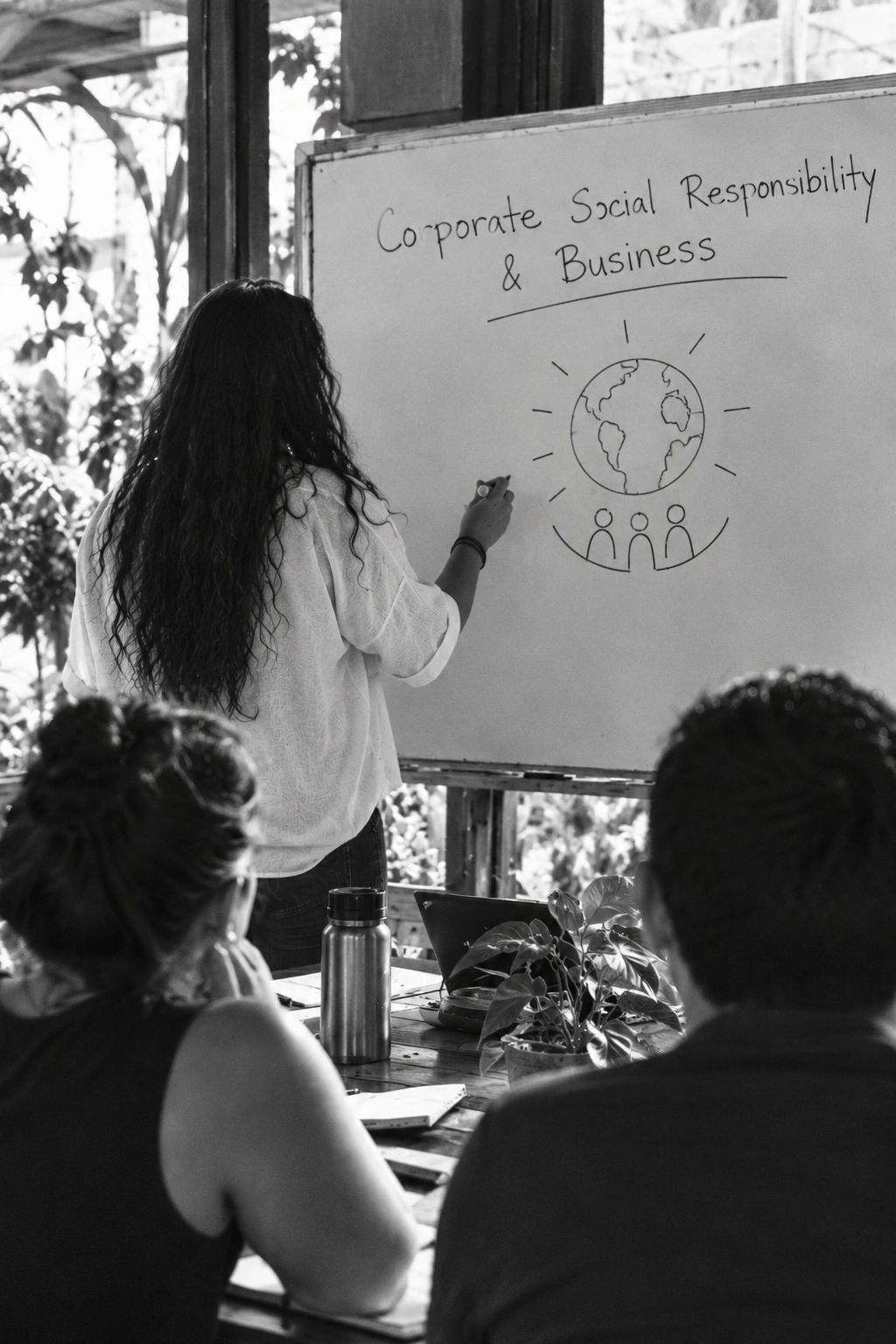
Corporate Social Responsibility & Business | 2020
By 2020, Maitreya’s exploration of ethics and organizational responsibility was also entering contemporary business education.
Founder Roger Epstein participated as a guest commentator in the Executive MBA program at the University of Hawai‘i at Mānoa’s Shidler College of Business, contributing to an interactive program on Corporate Social Responsibility.
Through student presentations, debate, and dialogue with business and community leaders, the program explored the responsibilities of corporations beyond profit, including their effects on employees, communities, society, and the environment.
Questions surrounding capitalism, ethical leadership, sustainability, economic inequality, and corporate accountability continued the conversation Maitreya had begun years earlier: How can economic and organizational life contribute to the common good?
Millennial Meditation | 2021
Maitreya’s commitment to dialogue also found expression in Millennial Mediation, developed in 2021 by Lani and Elizabeth together with Etienne.
The program explored mediation and dialogue as tools for addressing differences and strengthening human relationships. Although attendance was limited, the initiative formed part of Maitreya’s continuing experimentation with practical approaches to communication, reconciliation, and peace.
Tracing the Roots of the Abrahamic Religions | 2022
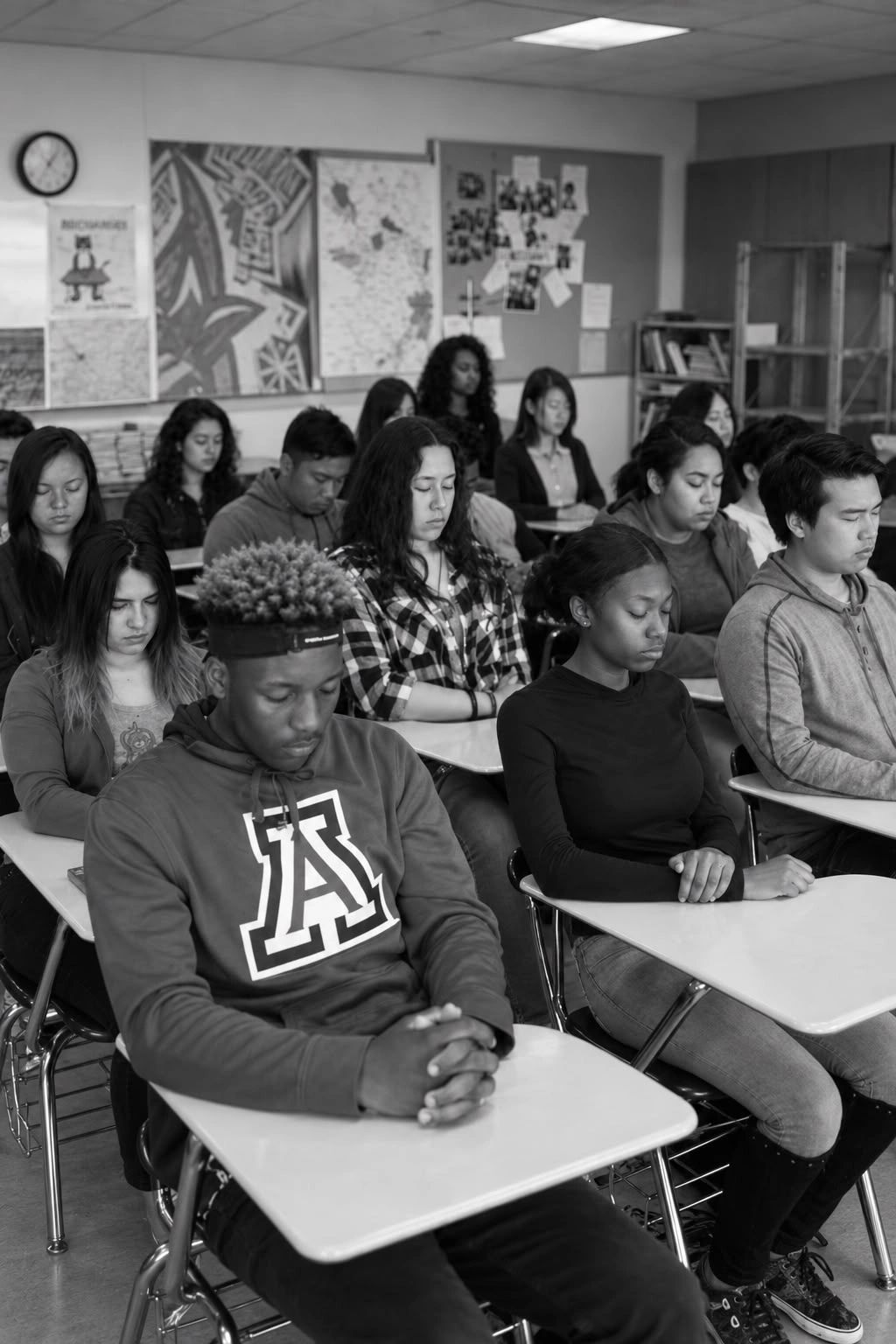
In 2022, the search for understanding across difference took a distinctly interfaith form through Tracing the Roots of the Abrahamic Religions at BYU–Hawai‘i.
Jewish, Christian, and Muslim presenters explored the historical foundations of their traditions, examining both their differences and the profound heritage they share.
The gathering sought to replace assumptions with understanding and create a respectful environment in which religious difference could become an opportunity for dialogue rather than division.
According to Maitreya’s records, one of the collaborating families subsequently developed the Pono Pono Peace Initiative, carrying aspects of that commitment into new community work.
It represented precisely the kind of legacy Maitreya seeks to create: not simply successful events, but ideas and relationships capable of continuing after the original gathering ends.
Interfaith Dialogue & Peacebuilding | Ongoing
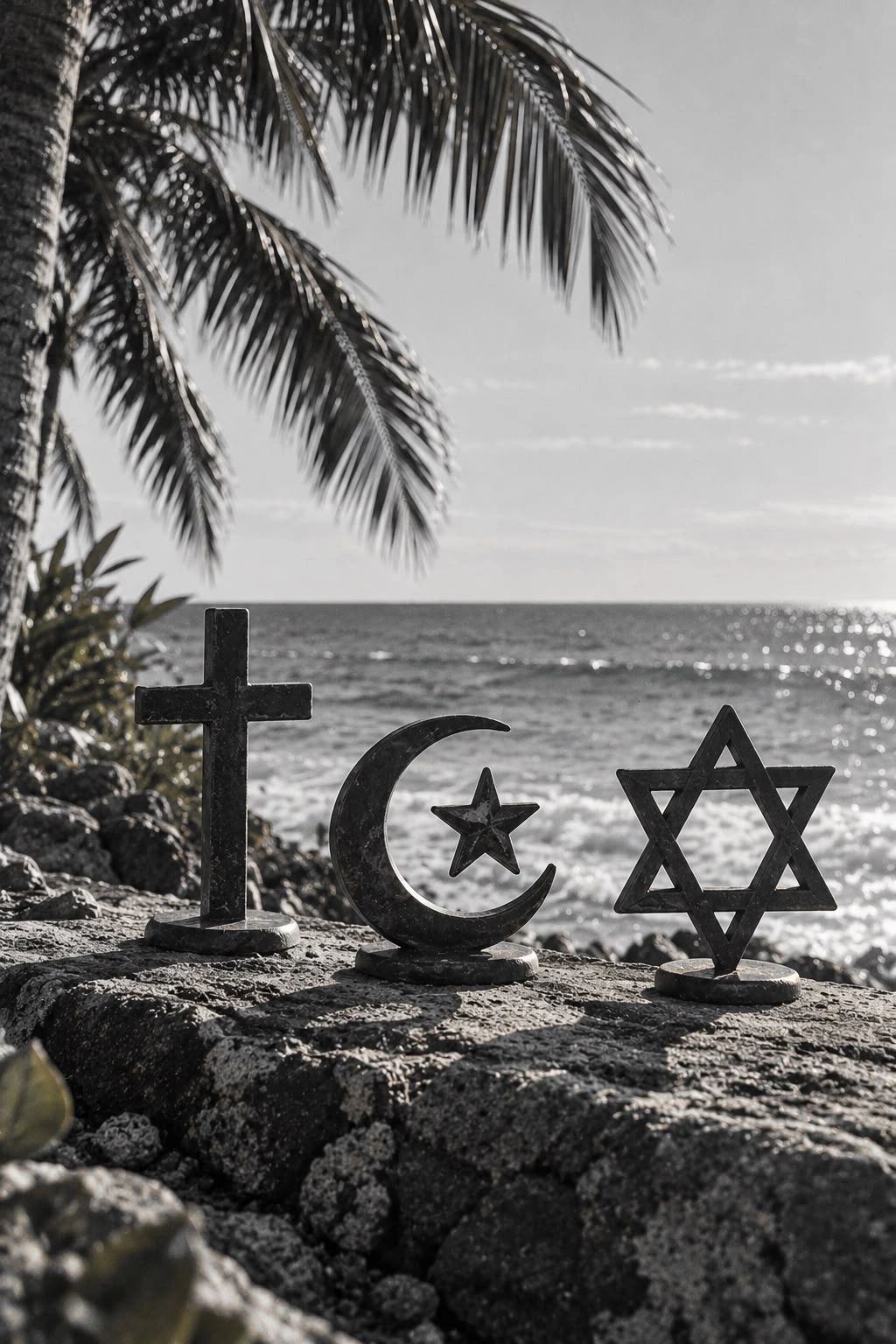
Tracing the Roots was part of a much broader history of interfaith engagement.
Maitreya has participated in Hawai‘i’s interfaith and peacebuilding community through relationships with Hawai‘i Interfaith ʻOhana, the Hawai‘i Association of International Buddhists, CEEDS of Peace, the Universal Peace Federation, and other community organizations.
Activities included interfaith dialogue, prayers and discussions for peace, and programs such as Overcoming Prejudice With Aloha, which brought Jewish and Muslim perspectives into conversation around understanding and reconciliation.
Across these relationships, interfaith work became another expression of Maitreya’s central proposition: difference does not have to disappear for connectedness to become visible.
The Practice Center: Attitudinal Healing & Forgiveness | Early 2020s
Maitreya also supported the expansion of attitudinal healing and forgiveness work in Hawai‘i through The Practice Center.
The initiative received support from the Hawai‘i Department of Human Services, Office of Youth Services, and connected healing and forgiveness practices with programs serving young people and the wider community.
In this way, ideas Maitreya had explored for decades through forgiveness and contemplative practice continued finding new applications in community settings.

Supporting Micronesian Children & Families | Early 2020
That commitment to practical service also extended to initiatives supporting Micronesian children and families in Hawai‘i.
Historical records describe activities supporting young people in Kalihi Valley, opportunities for swimming instruction, family programming, and sports initiatives designed to cultivate respect, responsibility, and positive participation.
These projects reflected a recurring pattern throughout Maitreya’s history: bringing broad values such as compassion, dignity, and interconnectedness into specific relationships and community needs.

World Opt Institute / Gaia Alliance 2020
Connectedness also extends beyond human relationships.
Through the World Opt Institute/Gaia Alliance, Maitreya supported efforts associated with environmental stewardship and the protection of dolphins and whales. The initiative sought resources for international marine-conservation work and expanded the meaning of interconnectedness to encompass humanity’s relationship with other living beings and the natural world
The Happiness Teachings | 2023
After decades of work involving forgiveness, healing, Aloha, and contemplative practice, happiness increasingly emerged as another way of exploring human flourishing.
On September 9, 2023, Maitreya’s exploration included The Happiness Teachings with Dr. Dean Nelson, presented online through the Berkeley Shambhala Center in California.
Drawing upon teachings from the Bön and Nyingma lineages of Tibetan Buddhism and Dr. Nelson’s decades of Buddhist meditation experience, the program introduced accessible contemplative practices intended to help participants reconnect with inner happiness, awareness, and natural joy.
It continued a pattern present since Maitreya’s earliest years: bringing profound spiritual and philosophical traditions into forms people can explore and apply in everyday life.

Reimagining Lahaina: Constructing an Authentically Hawaiian Future 2023
Following the devastation of Lahaina, Maitreya explored how rebuilding might become more than physical reconstruction.
Reimagining Lahaina: Constructing an Authentically Hawaiian Future envisioned a future deeply rooted in Native Hawaiian culture, values, knowledge, and relationship with the land.
The proposal considered how hoʻoponopono, ʻāina, ʻohana, traditional sustainability practices, and contemporary knowledge might inform urban planning, agriculture, tourism, economic development, community well-being, and governance. Ideas included modern interpretations of ahupuaʻa, revitalized loko iʻa systems, support for Hawaiian-led businesses and workers, culturally responsible tourism, and a contemporary Puʻuhonua providing sanctuary, education, social and mental-health services, spiritual practice, and reconnection with community and nature.
Rather than attempting to recreate the past, the initiative asked how ancestral Hawaiian wisdom might enter into dialogue with modern technology, architecture, law, sustainability, and community development to help imagine a more culturally rooted and interconnected future.
Mindfulness Meditation & Stress Reduction 2023
Maitreya’s educational work also extended into the relationship between contemplative practice, health, and human well-being through Mindfulness Meditation and Stress Reduction, documented in connection with the University of Hawai‘i at Mānoa’s John A. Burns School of Medicine in Honolulu.
The program explored mindfulness as a practical response to stress and burnout while cultivating awareness, gratitude, joy, compassion, forgiveness, and self-mastery. Its curriculum moved from the foundations and health dimensions of mindfulness into deeply human experiences including communication, anger, pain, grief, and death.
The program brought together several threads that had existed throughout Maitreya’s history: contemplative wisdom, education, healing, science, and the practical challenges of everyday life.

Aloha Maitreya Peace Sanctuary | 2020
Maitreya’s work has also needed a physical home for connection.
Its Hoaaina Street headquarters served as a gathering place for meetings, conferences, webinars, visiting presenters, and collaborators. Envisioned as the Aloha Maitreya Peace Sanctuary, the space offered a home for dialogue, learning, collaboration, and community grounded in Maitreya’s commitment to peace and connectedness.
In many ways, the Sanctuary gave physical expression to what Maitreya had spent decades trying to create through its programs: a place where people, traditions, disciplines, and ideas could meet.